
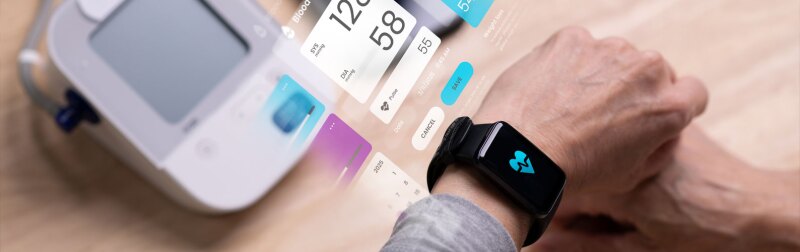
Some of the most significant technological advancements in medicine aren’t bulky machines or AI algorithms—they’re devices that people can wear every day. From biosensors to e-tattoos, biomedical wearable devices are redefining how healthcare professionals interact with and care for their patients. As engineers advance these innovations, they must prioritize data security, patient privacy and device reliability to ensure that these technologies serve patients safely and effectively.
Biomedical engineering and wearables are shaping the future of the medical industry by improving diagnosis accuracy, monitoring and management. As a biomedical engineer, you'll be at the forefront of these developments, creating devices that enable continuous health monitoring and early intervention.
This article will explore how biomedical engineers and wearable technology intersect to transform modern medicine.
The Role of Biomedical Engineering in Wearable Technology
Biomedical engineering bridges the gap between engineering and medicine to solve complex healthcare challenges through innovation and design. Biomedical engineers develop medical equipment and healthcare processes, ranging from pacemakers to artificial limbs to second skins. Today, wearable tech is one of the emerging trends in biomedical engineering, as it turns high-tech equipment into everyday apparel and accessories.
Traditional medical devices have evolved into wearables that empower patients to monitor their health data in real time. For example, wearable glucose monitors enable individuals with diabetes to track their blood sugar levels continuously, which provides them with information that was previously only available through periodic finger-stick tests. The technology in pacemakers and artificial limbs allows people to live more comfortably and safely, despite medical challenges.1,2 But the newest wearable tech is even more advanced, seamlessly blending with the human body, offering ongoing health insights and greater independence.
Developing these technologies requires collaboration across disciplines. Biology and engineering principles merge with medicine to create life-saving innovations.3
Applications of Wearable Technology in Healthcare
Wearable technology enables continuous health monitoring and proactive disease management. These devices range from consumer products that track vital signs and activity to specialized medical equipment designed for specific chronic conditions and health risks.
Examples of biomedical wearable devices include:
- Smart watches, rings and fitness trackers
- Continuous glucose monitors
- Wearable electrocardiogram (ECG) monitors
- Wearable defibrillators
- Biosensor patches
- Baby smart socks
These devices help prevent, diagnose and manage various health conditions. Doctors can use comprehensive data collected from wearable tech to gain a better understanding of patients' daily health patterns. Patients can care for themselves using these devices by setting alerts to signal when they need to slow down their heart rate, increase their blood glucose or seek medical treatment.
For example, people with heart disease can use wearable ECG monitors to track cardiac rhythms continuously, detecting arrhythmias that might otherwise go unnoticed between doctor visits, while parents can use smart baby socks to monitor their infant's oxygen levels and reduce the risk of Sudden Infant Death Syndrome (SIDS). Wearable blood pressure monitors can identify troubling health trends before problems arise—such as when unusually high readings prompt someone to seek medical advice before hypertension becomes severe.4
Materials Science in Biomedical Devices
Innovative materials science transforms medical devices into comfortable, everyday apparel and accessories. Advanced materials in bioinstrumentation in healthcare include:5
- Transient electronic systems: Devices that safely dissolve or disintegrate in or on the body after use, eliminating the need for removal
- Gallium-based liquid metals: Flexible metals that conform to the body's natural contours for comfortable, adaptable devices
- Flexible electronics: Electronics made with 2D materials that integrate seamlessly into various surfaces for unobtrusive wearing
- E-tattoos: Ultrathin, skin-soft electronics that collect data without causing discomfort or limiting mobility
These materials bridge the gap between biology and engineering, making it possible to monitor and manage chronic conditions in real time.
Collaboration Between Biomedical Engineers and Healthcare Professionals
Biomedical engineering thrives on interdisciplinary collaboration. Medical challenges identify healthcare needs, which in turn reveal opportunities for biomedical innovation.
Effective device development requires that healthcare professionals clearly articulate the challenges they face in delivering care. For example, the inability to monitor blood pressure throughout the day or the difficulty of providing comfortable wearable monitors signals to biomedical engineers where solutions are needed.
Biomedical engineers must stay current on technological advancements—particularly in materials science—to leverage them in solving these healthcare problems. This collaboration between medical and engineering professionals is essential to creating biomedical devices that improve and save lives.
Further development of these technologies will enhance patient outcomes, streamline clinical workflows and improve diagnostic accuracy.6
Engineer the Future of Wearable Healthcare Technology
The innovations discussed throughout this article—from e-tattoos and flexible electronics to collaborative problem-solving between engineers and clinicians—represent the cutting edge of biomedical engineering. Advancing this field requires specialized education that combines engineering principles with medical application and hands-on experience with emerging technologies.
The online Master of Science in Biomedical Engineering program at Case Western Reserve University prepares you to lead in this rapidly evolving field. CWRU was founded in 1968 as one of the first BME programs in the world and currently ranks #19 among graduate biomedical engineering programs nationwide.7 The curriculum combines engineering rigor with medical application through its joint program between the Case School of Engineering and School of Medicine.
The program's 10 comprehensive courses cover the essential skills for wearable device development: instrumentation design, biosignal analysis, materials selection and translational applications. You'll explore the same advanced materials discussed in this article—flexible electronics, biocompatible sensors and innovative monitoring systems—while learning to navigate the regulatory, ethical and practical challenges of bringing these devices to market.
With 100% online delivery, you can complete the program in as few as 18 months while continuing to work. You'll learn from faculty conducting cutting-edge research in wearable biosensors, implantable devices and health monitoring systems—backed by more than $60 million in current grants and connections to 270+ industry partners. These partnerships provide real-world context for your coursework and potential pathways to career advancement in medical device companies, research institutions or healthcare organizations.
Whether you're looking to design the next generation of continuous glucose monitors, develop comfortable cardiac monitoring systems or create new applications for transient electronics, this program provides the knowledge and connections to turn innovative ideas into life-changing medical devices.
Advance in the rapidly evolving world of biomedical engineering. To learn more about our admissions and tuition options, schedule a call with an admissions outreach advisor.
- Retrieved on November 11, 2025, from mayoclinic.org/tests-procedures/pacemaker/about/pac-20384689
- Retrieved on November 11, 2025, from pmc.ncbi.nlm.nih.gov/articles/PMC1121287/
- Retrieved on November 11, 2025, from linkedin.com/pulse/intersection-biomedical-engineering-wearable-technology-chau-vuong-t9mnf/
- Retrieved on November 11, 2025, from pmc.ncbi.nlm.nih.gov/articles/PMC12107229/
- Retrieved on November 11, 2025, from axial.acs.org/materials-science/wearable-technology-trends-innovations-and-future-directions
- Retrieved on November 11, 2025, from medical.researchfloor.org/emerging-trends-in-biomedical-engineering-from-wearable-tech-to-biofabrication/
- Retrieved on November 11, 2025, from usnews.com/best-graduate-schools/top-engineering-schools/case-western-reserve-university-02138