Solve bigger problems.
Request a Brochure
Who is this brochure for?
By clicking "Get Program Brochure" and submitting this form, I agree to receive text messages, emails and other communication regarding educational programs and opportunities, and to be contacted by Case Western Reserve University and Everspring, its authorized representative. Message and data rates may apply. Message frequency varies. Reply HELP for help and STOP to cancel. View our privacy policy and disclosures.
Thank you for your submission!
Oops, something went wrong.

An Online Master's in Mechanical Engineering for Command of the Discipline

It's true: You can earn a mechanical engineering master's by getting comfortable with one specialty, but the CWRU online Master of Science in Mechanical Engineering program is built differently. It develops your working command across the full range of the field, from aerospace and robotics to biomanufacturing and energy systems. And it gives you the analytical depth to back it up.

Your instructors are CWRU's mechanical and aerospace engineering faculty: the people building robots inspired by living animals, designing heat engines that turn industrial waste heat back into electricity, and developing the biomanufacturing platforms behind new medical therapies. The program brings their work and expertise into your life on a schedule that fits the career you're already building.

Program Snapshot

  • 30 credits, 10 courses (eight core, two electives)
  • 100% online, largely asynchronous
  • Three start dates per year: spring, summer, fall
  • Completable in about 18 months at full pace
  • No thesis required

Built to Tackle the Hard Problems

Throughout your career, you'll be the engineer your team relies on when the problem is technically hard, when the model has to hold up, when intuition isn't enough. The CWRU online MS in Mechanical Engineering builds exactly that depth.

You'll graduate ready for the senior technical roles where engineering depth is the work itself: principal engineer, senior R&D, advanced design lead, modeling and simulation specialist. You'll have surpassed competence and stepped up into a working mastery of the field.
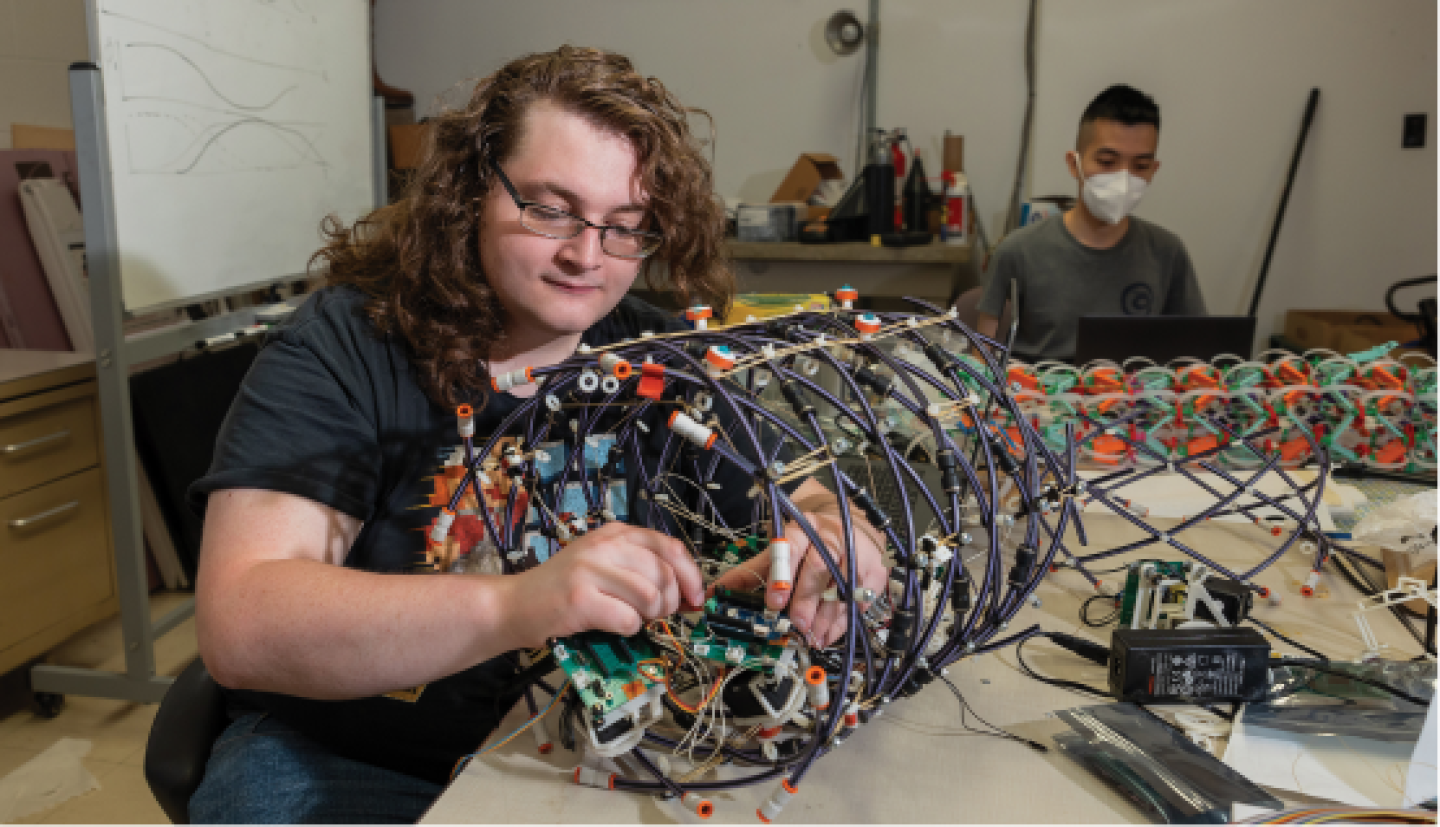
A male CWRU mechanical engineering student working on device in a fabrication workshop.

The Online MS in Mechanical Engineering Curriculum

Core Courses

All eight courses are required.

EPOM 400: Leadership and Interpersonal Skills

An experience-based approach to communication, emotional intelligence and behavioral fluency in the workplace. Students learn to recognize, manage and leverage these skills in business relationships and in team and group processes, developing an effective leadership style. Working in teams, students examine the topics from the perspective of both members and leaders and formulate strategies to reach desired outcomes.

EMAE 450: Advanced Engineering Analysis

Tools for solving the mathematical problems most commonly encountered in mechanical engineering. The course covers analytical and computational approaches to linear and nonlinear problems in both discrete and continuous systems, built around specific examples from solid mechanics, dynamics, vibrations, heat transfer and fluid mechanics.

EMAE 456: Biomanufacturing and MEMS (Micro-Electro-Mechanical Systems)

Microscale technologies enabling advanced capabilities in biology and medicine. BioMEMS brings together mechanical engineering, biomedical engineering, chemical engineering, materials science, electrical engineering, clinical sciences, medicine and biology. The course introduces miniaturized systems for biology and medicine, the fundamentals of microscale fluid and mechanical behavior, and BioMEMS applications in tissue engineering, implantable microdevices, proteomics, genomics, molecular biology and point-of-care platforms.

EMAE 460: Theory and Design of Fluid Power Machinery

The fluid mechanics and thermodynamics of fluid power machinery design. Examples and applications draw from axial and radial flow turbomachinery, positive displacement devices and their components.

EMAE 480: Fatigue of Materials

The fundamental and applied aspects of fatigue in metals, polymers and ceramics. Topics include material behavior under stress and strain cycling, methods of computing cyclic stress and strain, cumulative fatigue damage under complex loading, linear elastic fracture mechanics applied to fatigue crack propagation, mechanisms of fatigue crack initiation, and mechanistic and probabilistic approaches to fatigue life prediction.

EMAE 481: Advanced Dynamics I

A broader expertise in dynamics than typical undergraduate work provides. The course develops particle and rigid body kinematics and dynamics for two- and three-dimensional motion, reviews Newtonian mechanics, and introduces Lagrange's equations applied to constrained and unconstrained systems. Concepts of virtual work are also introduced. Newton's and Lagrange's equations are applied to mechanisms, gyroscopes and vehicles.

EMAE 487: Vibration Problems in Engineering

The fundamentals of vibration engineering, including theory, computational aspects and applications. Topics include free and forced-vibration problems in single- and multi-degree-of-freedom damped and undamped linear systems, vibration isolation and absorbers, modal analysis and approximate solutions, vibration of continuous media and noise problems.

EMAE 494: Energy Systems

A graduate-level course at the intersection of advanced energy and innovation. The energy market is dynamic, complex and full of sub-systems with multiple paths to market. The course gives students a process for managing innovation, an understanding of the energy market, and hands-on experience building a business through E-teams who pitch their ideas to investors.

Electives: Choose two of three.

ECSE 401: Digital Signal Processing

Characterization of discrete-time signals and systems. Fourier analysis: the Discrete-time Fourier Transform, the Discrete-time Fourier series, the Discrete Fourier Transform and the Fast Fourier Transform. Continuous-time signal sampling and signal reconstruction. Digital filter design: infinite impulse response filters, finite impulse response filters, filter realization and quantization effects. Random signals: discrete correlation sequences and power density spectra, response of linear systems. Recommended preparation: Undergraduate Signals and Systems course or EEC 313.

ECSE 411: Applied Engineering Statistics

An intensive introduction to the fundamental concepts, applications and practice of contemporary engineering statistics. Each topic is introduced through realistic sample problems solved first in standard spreadsheet programs, then in more sophisticated software packages. Primary attention is given to the fundamental concepts underlying standard analysis methods.

EPOM 407: Engineering Economics and Financial Analysis

A toolkit for deciding which course of economic action is most desirable in an engineering project. Topics include capital allocation, the time value of money, economic equivalence in engineering design, criteria for comparing projects, depreciation and taxation, retirement and replacement, the effects of inflation, optimization methods, decision analysis under risk and accounting fundamentals.

Faculty Whose Work Defines the Field

The faculty teaching this program don't divide their time between research and industry; they live in both. Among them:

Sunniva Collins

Sunniva Collins, PhD
Program Director, Associate Professor, Mechanical and Aerospace Engineering

Sunniva Collins, PhD, is the program's director and associate dean of professional programs at the Case School of Engineering. She joined CWRU after 18 years at Swagelok Company in technical specialist and engineering management roles. A Fellow of ASM International, her research focuses on materials science.
faculty Roger Quinn

Roger Quinn, PhD
Arthur P. Armington Professor of Engineering, Mechanical and Aerospace Engineering

Roger Quinn, PhD, is the founder of the CWRU Biorobotics Laboratory. His work has produced dozens of robots based on biological principles, with applications spanning human-machine interfacing, soft robots and neural control systems. The Arthur P. Armington Professor of Engineering, he's the author of more than 250 publications and holds 10 patents on practical devices.
Dr. Steve Hostler

Steve Hostler, PhD
Assistant Professor, Mechanical and Aerospace Engineering

Steve Hostler, PhD, developed CO₂-based heat engines at Echogen Power Systems before joining CWRU's faculty. His team's work on a kW-class heat engine for industrial waste heat recovery produced seven patents. He continues research on novel thermal management materials and is affiliated with the Great Lakes Energy Institute.

Your faculty come from across industries and across the country. Your professors come from inside the work.

Meet the Rest of the Faculty

Where a CWRU MS in Mechanical Engineering Takes You

Mechanical engineer is currently ranked #2 on U.S. News & World Report's list of best engineering jobs,1 and the U.S. Bureau of Labor Statistics projects 9% job growth in the field between 2024 and 2034.2 The CWRU online MS prepares you for the senior technical roles that follow here.

Engineer uses a thermal imaging camera to inspect industrial equipment.

Thermal Engineer
Median annual salary: $164,0003
The engineering behind every system that has to manage heat. Build the thermal models and run the heat-transfer analyses that shape advanced cooling systems, power generation and the energy infrastructure the modern world runs on.
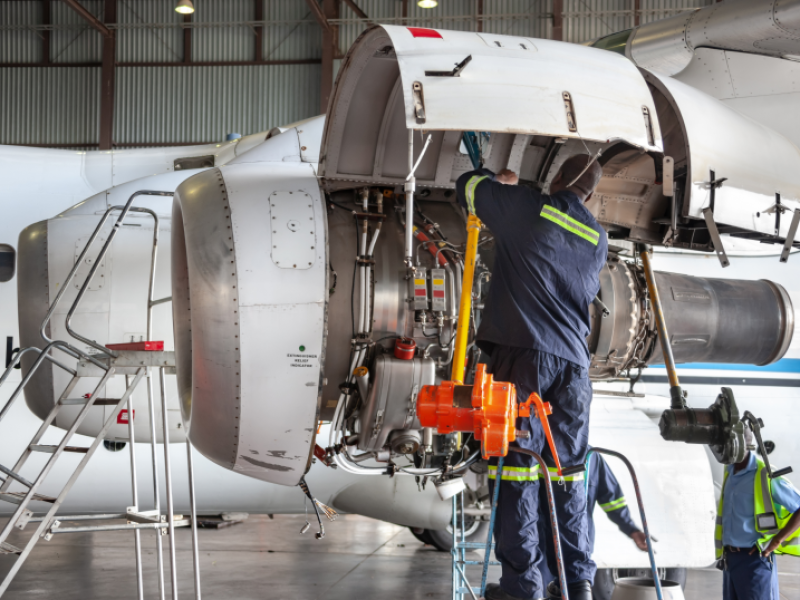
Aerospace engineers configuring a jet engine.

Aerospace Engineer
Median annual salary: $166,0004
The engineering work that keeps machines aloft under the most demanding conditions in the field. Apply structural analysis, computational aerodynamics and materials modeling to the design of aircraft, spacecraft and propulsion systems.
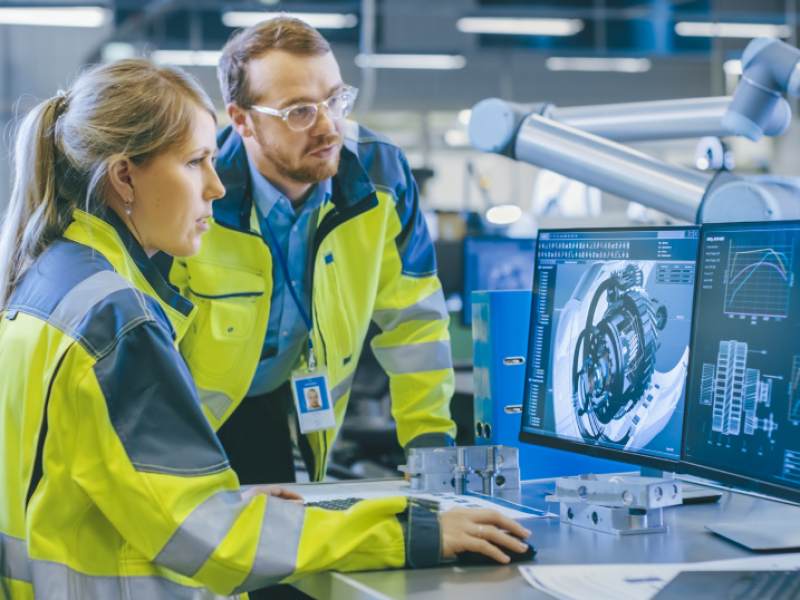
Two mechanical engineers reviewing schematics on a computer screen.

Mechanical Engineer
Median annual salary: $124,0005

The technical work behind medical devices, autonomous vehicles and the large-scale industrial systems the modern world depends on. Bring the analytical depth that complex mechanical systems require: stress analysis, finite-element modeling, dynamics simulation and materials engineering.

A Significant Tuition Reduction for Every Qualified Applicant

Every qualified new applicant to the online Master of Engineering program receives a tuition reduction of more than $28,000, bringing total program tuition to $39,000. CWRU alumni receive an additional scholarship. Employer reimbursement, federal aid and veterans' benefits can work to your advantage, as well.

Review Tuition and Financial Aid

Two male CWRU graduates walking outside the campus grounds.
CWRU Admission Advisor Brad

Need more info? We’ve got you covered.

There’s a lot to know about the online programs in Case School of Engineering, and you’re bound to have questions. We’re here to help. For information and support, schedule a call with Brad: He’s a knowledgeable, friendly admissions outreach advisor who’ll make sure you get all the answers.

Admissions Deadlines

Oct
31
Priority Deadline
October 31
Spring 2027 Term
Nov
30
Final Deadline
November 30
Spring 2027 Term
Jan
11
Start Date
January 11
Spring 2027 Term