Don’t just contribute. Lead.
Request a Brochure
Who is this brochure for?
By clicking "Get Program Brochure" and submitting this form, I agree to receive text messages, emails and other communication regarding educational programs and opportunities, and to be contacted by Case Western Reserve University and Everspring, its authorized representative. Message and data rates may apply. Message frequency varies. Reply HELP for help and STOP to cancel. View our privacy policy and disclosures.
Thank you for your submission!
Oops, something went wrong.

An Online Master of Engineering for Engineers Ready to Lead

Engineering leadership is more than management with extra steps. It's the ability to read technical problems and business problems at the same time. To speak fluently to engineers and to executives. To make decisions that account for both the physics and the P&L.

The online Master of Engineering program at Case Western Reserve University is built to develop that multifaceted expertise. It's the degree for you, because you’ve excelled at technical work and now want to move to the front of the room.

Program Snapshot

  • 30 credits, 10 courses
  • 100% online, largely asynchronous
  • Three start dates per year: spring, summer, fall
  • Completable in about 18 months at full pace
  • Three concentration choices
  • No thesis required
  • Capstone project as the culminating work

What We Mean by “Practice-Focused”

The online Master of Engineering is not a research degree. There's no thesis, no extended dissertation work, no expectation that you'll spend your final semester in a lab. It's a degree for engineers who plan to lead engineering work in the world, not study it from a distance.

You'll take five core courses that develop the business, leadership, design, statistics and economics fluency that engineering leadership demands. You'll take four technical concentration courses to deepen expertise in the engineering discipline of your choice. And you'll close the program with a capstone project that mirrors what real engineering leadership looks like.

0:00 / 0:00
Video Companion

Transcript

So hello, my name is Sharon Ehasz. I am a PhD candidate in the Organizational Behavior PhD program at Weatherhead School of Management at Case Western Reserve University. I am teaching EPOM 400, which is the Leadership and Interpersonal Skills class that is offered every fall through the asynchronous online program. The reason that I jumped at the opportunity to be able to bring this information to the School of Engineering is because I truly believe in its importance and what a difference it can make in the lives of people who practice quality interpersonal skills, those whether they're in actual leadership positions or those who are leading by their example. The last piece as to why I feel passionately about what I am studying and this topic of interpersonal skills specifically within the leadership realm is that each person brings value. And I personally have a mission that I want every person to know they matter. And so if I can give skill sets to others or help people find the skill sets they already have to refine those and enhance those in a way that allows them to also show people that they matter and they have value, then for me this is a perpetuating gift that I'm able to give and an investment that I'm able to make in other people.

Three Master of Engineering Concentrations. Three Career Angles.

Choose the concentration that matches where you're headed.
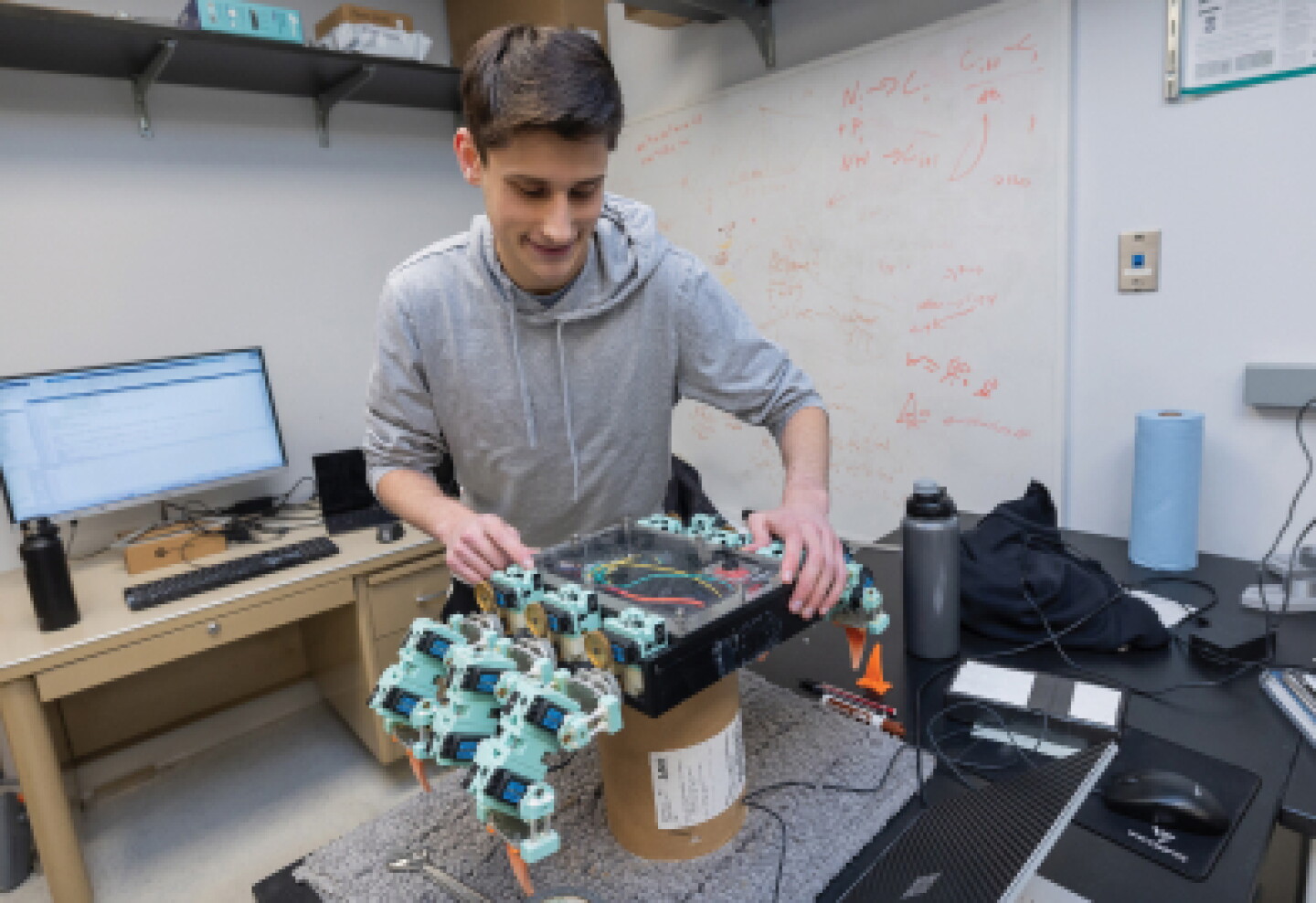
A male CWRU mechanical engineering student testing a mechanical device.

Mechanical Engineering

For engineers shaping the systems that move the world.

This is your concentration if you're headed for a career in aerospace, automotive, energy, manufacturing or robotics. The wrong engineering call in these industries can ground a plane or shut down a plant; you'll graduate prepared to make the right calls. Your faculty got here by building robots inspired by living animals, designing engines that pull electricity from industrial waste heat, and otherwise shaping where the field is going.
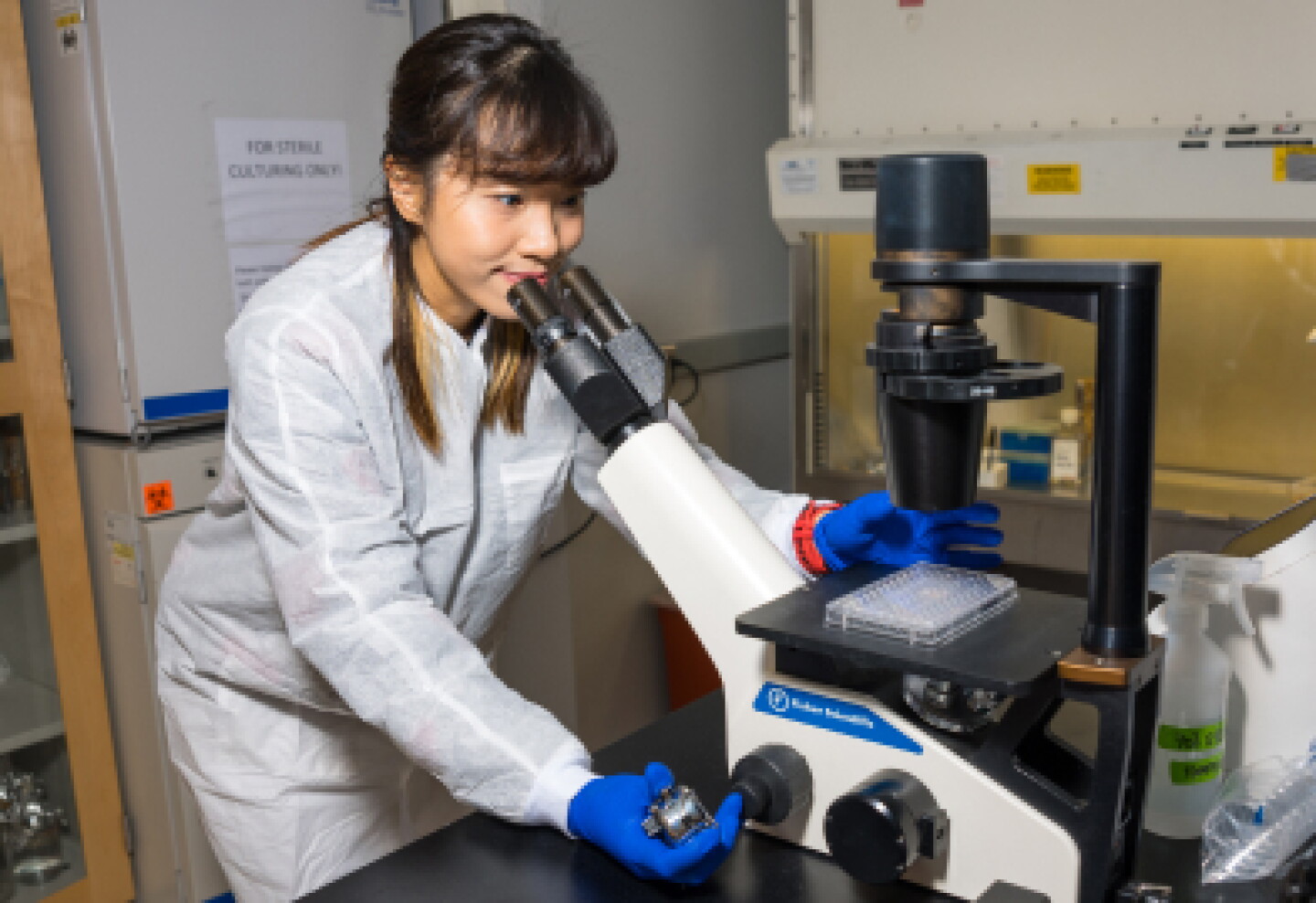
Close-up of a female CWRU biomedical engineering student reviewing sample through a microscope.

Biomedical Engineering

For engineers applying engineering principles to medical problems.

Here’s your path to a career developing medical devices, diagnostics or biotech products. These are industries where "it works in the lab" and "it works in the patient" aren’t the same thing, and the engineering team has to know both. You'll graduate ready to lead that work, with the regulatory and clinical fluency to make sure what you build actually reaches the people it's for. The concentration draws on CWRU's biomedical engineering department: one of the oldest in the world and still one of the best.

Close-up of two engineers reviewing progress on worksite.

Engineering Innovation, Management and Leadership

For engineers ready to run engineering and technology companies.

Prepare for a future that’s less about doing the engineering yourself and more about deciding what engineering gets done, who does it and how it survives contact with the market. You'll graduate ready for executive engineering roles, or to launch the companies those executives lead. Your faculty? People who have run companies and the IP attorneys who've helped them protect what they built.

The Online Master of Engineering Curriculum

Core Courses

EPOM 400: Leadership and Interpersonal Skills

An experience-based approach to communication, emotional intelligence, and behavioral fluency in the workplace. Students learn to recognize, manage, and leverage these skills in business relationships and in team and group processes, developing an effective leadership style. Working in teams, students examine the topics from the perspective of both members and leaders, and formulate strategies to reach desired outcomes.

EPOM 401: Introduction to Business for Engineers

An introduction to the business environment for practicing engineers. The course emphasizes the interplay between business and engineering in the context of the competitive marketplace (economics), how engineering proposals are evaluated (finance), the relationship between product and customer (marketing), making effective use of microdisciplinary teams (organizational behavior), and the manufacturing and production process (operations).

EPOM 403: Product and Process Design and Implementation

A solid grounding in the engineering design process and the management of technology, focused on the engineering and management activities used to develop and bring new products and processes to market. Recommended preparation: EPOM 401.

EPOM 405: Applied Engineering Statistics

An intensive introduction to the fundamental concepts, applications, and practice of contemporary engineering statistics. Each topic is introduced through realistic sample problems solved first in standard spreadsheet programs, then in more sophisticated software packages. Primary attention is given to the fundamental concepts underlying standard analysis methods.

EPOM 407: Engineering Economics & Financial Analysis

A toolkit for deciding which course of economic action is most desirable in an engineering project. Topics include capital allocation, the time value of money, economic equivalence in engineering design, criteria for comparing projects, depreciation and taxation, retirement and replacement, the effects of inflation, optimization methods, decision analysis under risk, and accounting fundamentals.

Capstone Course

EPOM 409: Master of Engineering Capstone Project

The capstone course for the Master of Engineering program, where students integrate the program's topics through an intensive case-study project. Interdisciplinary teams are assigned a major engineering project covering design concept through development to final manufacture, including business and engineering decision-making to maximize market penetration. Topics also include safety, environmental issues, ethics, intellectual property, product liability, and societal issues. Recommended preparation: EPOM 401, EPOM 403, EPOM 405, and EPOM 407.

Mechanical Engineering Concentration Courses

EMAE 450: Advanced Mechanical Engineering Analysis

Tools for solving the mathematical problems most commonly encountered in mechanical engineering. The course covers analytical and computational approaches to linear and nonlinear problems in both discrete and continuous systems, built around specific examples from solid mechanics, dynamics, vibrations, heat transfer, and fluid mechanics.

EMAE 456: Biomanufacturing and MEMS (Micro-Electro-Mechanical Systems)

Microscale technologies enabling advanced capabilities in biology and medicine. BioMEMS brings together mechanical engineering, biomedical engineering, chemical engineering, materials science, electrical engineering, clinical sciences, medicine, and biology. The course introduces miniaturized systems for biology and medicine, the fundamentals of microscale fluid and mechanical behavior, and BioMEMS applications in tissue engineering, implantable microdevices, proteomics, genomics, molecular biology, and point-of-care platforms.

EMAE 460: Theory and Design of Fluid Power Machinery

The fluid mechanics and thermodynamics of fluid power machinery design. Examples and applications draw from axial and radial flow turbomachinery, positive displacement devices, and their components.

EMAE 480: Fatigue of Materials

The fundamental and applied aspects of fatigue in metals, polymers, and ceramics. Topics include material behavior under stress and strain cycling, methods of computing cyclic stress and strain, cumulative fatigue damage under complex loading, linear elastic fracture mechanics applied to fatigue crack propagation, mechanisms of fatigue crack initiation, and mechanistic and probabilistic approaches to fatigue life prediction.

EMAE 481: Advanced Dynamics I

A broader expertise in dynamics than typical undergraduate work provides. The course develops particle and rigid body kinematics and dynamics for two- and three-dimensional motion, reviews Newtonian mechanics, and introduces Lagrange's equations applied to constrained and unconstrained systems. Concepts of virtual work are also introduced. Newton's and Lagrange's equations are applied to mechanisms, gyroscopes, and vehicles.

EMAE 487: Vibration Problems in Engineering

The fundamentals of vibration engineering, including theory, computational aspects, and applications. Topics include free and forced-vibration problems in single- and multi-degree-of-freedom damped and undamped linear systems, vibration isolation and absorbers, modal analysis and approximate solutions, vibration of continuous media, and noise problems.

EMAE 494: Energy Systems

A graduate-level course at the intersection of advanced energy and innovation. The energy market is dynamic, complex, and full of sub-systems with multiple paths to market. The course gives students a process for managing innovation, an understanding of the energy market, and hands-on experience building a business through E-teams who pitch their ideas to investors.

Biomedical Engineering Concentration Courses

EBME 401D: Biomedical Instrumentation & Signal Processing

The fundamental principles of biomedical measurements, integrating instrumentation and signal processing with problem-based hands-on experience. Open to graduate students from various undergraduate backgrounds.

EBME 406: Polymers in Medicine

The fundamentals and applications of polymers in medicine, in three parts: blood and soft-tissue reactions to polymer implants; the structure, characterization, and modification of biomedical polymers; and the application of polymers in cardiovascular and extravascular devices. The course includes clinical evaluation, recent advances, and current problems associated with different polymer implants.

EBME 410: Medical Imaging Fundamentals

The physical principles of medical imaging. Imaging devices for x-ray, ultrasound, magnetic resonance, and more. Image quality descriptions and patient risk.

EBME 421: Bioelectric Phenomena

Working knowledge of the theoretical methods used in electrophysiology and bioelectricity for both neural and cardiac systems. These methods are applied to describe the electrical behavior of excitable cells, the methods for recording their activity, and the effect of applied electrical and magnetic fields on excitable tissues.

EBME 432: Quantitative Analysis of Physiological Systems

Mathematical modeling and simulation of cellular, tissue, and organ systems, including respiratory, renal, liver, cardiovascular, neural, and muscular. Topics include dynamic mass transport and reaction processes, cellular metabolism, cardiac electrophysiology and regulation, excitable cells and tissue, and neural system integration, feedback, and control. Recommended preparation: differential equations, linear algebra, MATLAB.

EBME 440: Translational Research for BME

The translation of laboratory developments into improved biomedical research, clinical research, and patient care. Topics include interdisciplinary team communication, technology evaluation and research planning, clinical situations, validation study design, regulatory and oversight organization, protocol design and informed consent for IRB approval, and NIH requirements for human subject research. Special project reports produce IRB protocols or NIH-style proposals.

EBME 451: Cellular and Molecular Physiology

Cellular and molecular fundamentals for graduate students with little or no prior biology background. The course emphasizes the molecular and cellular mechanisms underlying physiological processes, with structure-function relationships addressed throughout. The goal is to develop understanding of physiological principles at the molecular and cellular level and promote independent thinking and the ability to solve unfamiliar problems.

EBME 471: Principles of Medical Device Design and Innovation

The fundamental principles of the biodesign innovation process. The course gives students the tools to identify unmet clinical needs, create innovative medical device concepts that respond to a primary unmet need, and understand the process for translating those concepts into the market. The course teaches the principles of "identify, invent, implement" in the field of biodesign.

Engineering Innovation, Management and Leadership Concentration Courses

EPOM 410: Intellectual Property Management and Opportunity Assessment

The commercialization of scientific inventions, with exposure to the challenges and opportunities of developing meaningful intellectual property from early discovery through clinic and market. Students learn to value a technological advance or invention holistically, focusing on issues beyond scientific efficacy: patient and practitioner value propositions, legal and IP protection, business modeling, market impacts, competition, and ethical, social, and healthcare-practitioner acceptance.

EPOM 411: Innovation—The Confluence of Need, Requirements and Creativity

The tools and methods of facilitation needed to move from a simple idea to a validated development concept with commercial potential. Drawing from Stanford's BioDesign, Lean Launch, Requirements by Design, and other programs, the course leads students through developing detailed perspectives on unmet need, validated design requirements, intellectual property analysis, and commercialization fundamentals.

EPOM 412: Technology Commercialization—Aligning Development Requirements to Value Creation Activities

The process of technology transfer. The course builds on IP management and commercialization activities that follow a new discovery, examining specific approaches to commercializing technology in academic and industry research and development. Topics include industry standards, sponsored research, licensing, and startup formation. Hands-on case studies present applications of law and policy in collaborative technology development.

EPOM 413: Innovation, Strategy and Leadership—Contemporary Approaches to Future Growth

Contemporary approaches to innovation, strategy, and leadership for engineering professionals positioned for future growth.

The Capstone: Engineering, Front to Back

The Master of Engineering capstone isn't an exam. It's a project. Interdisciplinary student teams take a major engineering project from design concept through development to final manufacture, making real decisions along the way: safety, environmental impact, ethics, intellectual property, product liability, and market strategy. By the time you finish, you'll have practiced doing the thing the degree is preparing you for.

Aerial view of the CWRU campus grounds at dusk.

Faculty Who've Done the Work

The Master of Engineering faculty at CWRU includes practicing executives, attorneys with deep technology-commercialization experience, and engineering researchers whose work has shaped their fields. Among them:

Dr. Joachim Mayer
Joachim Mayer, PhD
Lecturer
Joachim Mayer, PhD, who spent 25 years as president and CEO of divisions of publicly traded companies before founding four of his own.
faculty Ted Theofrastous
Ted Theofrastous
Lecturer
Ted Theofrastous, whose career bridges intellectual property law, venture investment and technology commercialization.

Your classmates come from across industries and across the country. Your faculty come from inside the work.

Meet the Rest of the Faculty

A Significant Tuition Reduction for Every Qualified Applicant

Every qualified new applicant to the online Master of Engineering program receives a tuition reduction of more than $28,000, bringing total program tuition to $39,000. CWRU alumni receive an additional scholarship. Employer reimbursement, federal aid and veterans' benefits can work to your advantage, as well.

Review Tuition and Financial Aid

Two male CWRU graduates walking outside the campus grounds.
CWRU Admission Advisor Brad

Need more info? We’ve got you covered.

There’s a lot to know about the online programs in Case School of Engineering, and you’re bound to have questions. We’re here to help. For information and support, schedule a call with Brad: He’s a knowledgeable, friendly admissions outreach advisor who’ll make sure you get all the answers.

Admissions Deadlines

Oct
31
Priority Deadline
October 31
Spring 2027 Term
Nov
30
Final Deadline
November 30
Spring 2027 Term
Jan
11
Start Date
January 11
Spring 2027 Term