Make medicine work better.
Request a Brochure
Who is this brochure for?
By clicking "Get Program Brochure" and submitting this form, I agree to receive text messages, emails and other communication regarding educational programs and opportunities, and to be contacted by Case Western Reserve University and Everspring, its authorized representative. Message and data rates may apply. Message frequency varies. Reply HELP for help and STOP to cancel. View our privacy policy and disclosures.
Thank you for your submission!
Oops, something went wrong.

An Online Master's in Biomedical Engineering Built Across Engineering and Medicine

We helped define the field of biomedical engineering. Launched in 1968, our Department of Biomedical Engineering was one of the first to teach this discipline. It remains a leader today, inside a university now ranked among the world's top 30.1

Learn from experts who move medical research from idea to working device. Who edit the journals where the field's defining work appears. Who have restored the sense of touch to people who've lost limbs. Our faculty have done all of that. Now they can teach you.

The online Master of Science in Biomedical Engineering, run jointly by the Case School of Engineering and the Case Western Reserve University School of Medicine, gives you access to that faculty and work on a schedule that fits the career you're already building.

Program Snapshot

  • 100% online delivery
  • 30 credit hours
  • 10 courses
  • Can be completed in as few as 18 months
  • Three annual starts: spring, summer and fall
  • Completion of differential equations course required

Where Engineering and Medicine Teach Side by Side

The program’s joint structure shapes every part of the experience. Your coursework spans the technical fundamentals of engineering and the clinical, regulatory and translational realities of medicine. Your peers come from engineering backgrounds, medical backgrounds and the spaces between. Your faculty includes both engineers and physicians, and your training prepares you to turn engineering into care that changes lives.

By the time you finish, you'll have the dual fluency that makes biomedical engineers valuable in every area where the discipline matters: medical devices, diagnostics, pharmaceuticals, biotech, regulatory bodies, hospitals and research.
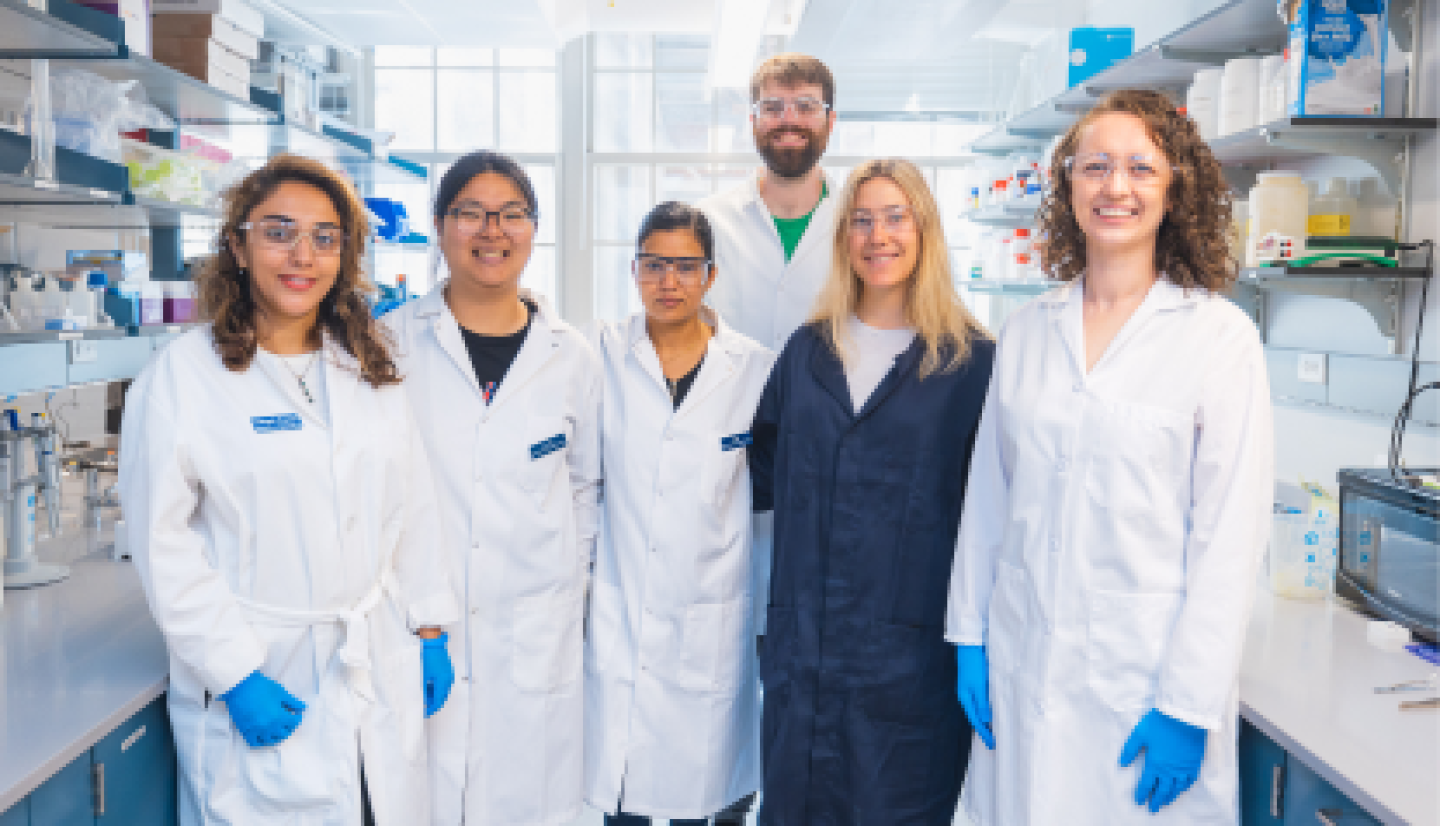
A group of CWRU biomedical engineering students smiling in lab.

The Online MS in Biomedical Engineering Curriculum

Recommended Preparation

We recommend that incoming students arrive with four semesters of math (including differential equations), two semesters of physics (including electromagnetics), two semesters of chemistry and one programming course.

Core Biomedical Engineering Courses

All students take EBME 401D and choose one additional core course.

EBME 401D: Biomedical Instrumentation & Signal Processing (Required)

The fundamental principles of biomedical measurements, integrating instrumentation and signal processing with problem-based hands-on experience. Open to graduate students from various undergraduate backgrounds.

EBME 432: Quantitative Analysis of Physiological Systems

Mathematical modeling and simulation of cellular, tissue and organ systems, including respiratory, renal, liver, cardiovascular, neural and muscular. Topics include dynamic mass transport and reaction processes, cellular metabolism, cardiac electrophysiology and regulation, excitable cells and tissue and neural system integration, feedback and control. Recommended preparation: differential equations, linear algebra, MATLAB.

EBME 451: Cellular and Molecular Physiology

Cellular and molecular fundamentals for graduate students with little or no prior biology background. The course emphasizes the molecular and cellular mechanisms underlying physiological processes, with structure-function relationships addressed throughout. The goal is to develop understanding of physiological principles at the molecular and cellular level and promote independent thinking and the ability to solve unfamiliar problems.

Core Engineering Courses

All students take EPOM 400 and choose one additional core engineering course.

EPOM 400: Leadership and Interpersonal Skills (Required)

An experience-based approach to communication, emotional intelligence and behavioral fluency in the workplace. Students learn to recognize, manage and leverage these skills in business relationships and in team and group processes, developing an effective leadership style. Working in teams, students examine the topics from the perspective of both members and leaders and formulate strategies to reach desired outcomes.

EPOM 405: Applied Engineering Statistics

An intensive introduction to the fundamental concepts, applications and practice of contemporary engineering statistics. Each topic is introduced through realistic sample problems solved first in standard spreadsheet programs, then in more sophisticated software packages. Primary attention is given to the fundamental concepts underlying standard analysis methods.

EPOM 407: Engineering Economics & Financial Analysis

A toolkit for deciding which course of economic action is most desirable in an engineering project. Topics include capital allocation, the time value of money, economic equivalence in engineering design, criteria for comparing projects, depreciation and taxation, retirement and replacement, the effects of inflation, optimization methods, decision analysis under risk and accounting fundamentals.

Biomedical Engineering Specialty Courses: Choose two of three.

EBME 406: Polymers in Medicine

The fundamentals and applications of polymers in medicine, in three parts: blood and soft-tissue reactions to polymer implants; the structure, characterization and modification of biomedical polymers; and the application of polymers in cardiovascular and extravascular devices. The course includes clinical evaluation, recent advances and current problems associated with different polymer implants.

EBME 410: Medical Imaging Fundamentals

The physical principles of medical imaging. Imaging devices for x-ray, ultrasound, magnetic resonance and more. Image quality descriptions and patient risk.

EBME 421: Bioelectric Phenomena

Working knowledge of the theoretical methods used in electrophysiology and bioelectricity for both neural and cardiac systems. These methods are applied to describe the electrical behavior of excitable cells, the methods for recording their activity and the effect of applied electrical and magnetic fields on excitable tissues.

Translational Courses: Both are required.

EBME 440: Translational Research for BME

The translation of laboratory developments into improved biomedical research, clinical research and patient care. Topics include interdisciplinary team communication, technology evaluation and research planning, clinical situations, validation study design, regulatory and oversight organization, protocol design and informed consent for IRB approval and NIH requirements for human subject research. Special project reports produce IRB protocols or NIH-style proposals.

EBME 471: Principles of Medical Device Design and Innovation

The fundamental principles of the biodesign innovation process. The course gives students the tools to identify unmet clinical needs, create innovative medical device concepts that respond to a primary unmet need and understand the process for translating those concepts into the market. The course teaches the principles of "identify, invent, implement" in the field of biodesign.

Technical Electives: Choose two of three.

EMAE 456: Biomanufacturing and MEMS (Micro-Electro-Mechanical Systems)

Microscale technologies enabling advanced capabilities in biology and medicine. BioMEMS brings together mechanical engineering, biomedical engineering, chemical engineering, materials science, electrical engineering, clinical sciences, medicine and biology. The course introduces miniaturized systems for biology and medicine, the fundamentals of microscale fluid and mechanical behavior and BioMEMS applications in tissue engineering, implantable microdevices, proteomics, genomics, molecular biology and point-of-care platforms.

EPOM 401: Introduction to Business for Engineers

An introduction to the business environment for practicing engineers. The course emphasizes the interplay between business and engineering in the context of the competitive marketplace (economics), how engineering proposals are evaluated (finance), the relationship between product and customer (marketing), making effective use of microdisciplinary teams (organizational behavior) and the manufacturing and production process (operations).

EBME 601: Research Projects

A practical project in biomedical signal sensing. Students design and build devices for detecting, amplifying and displaying a physiological signal. This course can be substituted for any specialty or translational course, provided arrangements can be made with a CWRU faculty member or with the student's supervisor at work.

Faculty Whose Work Defines the Field

The faculty teaching this program don't divide their time between research and the world; they live in both. Among them:

Dr. Dominique Durand

Dominique Durand, PhD
Program Director

Dominique Durand, PhD, is the program's director. He holds the Elmer Lincoln Lindseth Professorship in Biomedical Engineering and directs CWRU's Neural Engineering Center. He's a Fellow of the IEEE, the American Institute for Medical and Biomedical Engineering and the Institute of Physics. He founded and edits the Journal of Neural Engineering.
Dustin Tyler

Dustin Tyler, PhD
Kent H. Smith II Professor of Biomedical Engineering

Dustin Tyler, PhD, is a co-founder of Afference, the neural-interface company whose technology is restoring the sense of touch to people who've lost limbs. In 2024, Afference was named one of 45 finalists for the marquee pitch competition at South by Southwest, selected from 670 applicants.
Stephen D. Fening

Stephen Fening, PhD
Associate Professor, Biomedical Engineering

Stephen Fening, PhD, directs the Case-Coulter Translational Research Partnership, where the work is taking biomedical research from invention through clinical trial to product. His stated career goal is to make substantial improvements to patient care and he's been doing exactly that for decades.

Your classmates come from across industries and across the country. Your faculty come from inside the work.

Meet the Rest of the Faculty

Where the CWRU Online MS in Biomedical Engineering Takes You

Biomedical engineering is one of the fastest-growing engineering fields, with the U.S. Bureau of Labor Statistics projecting 5% growth in BME jobs between 2024 and 2034.2 The CWRU online MS program prepares you for advanced roles across the field.
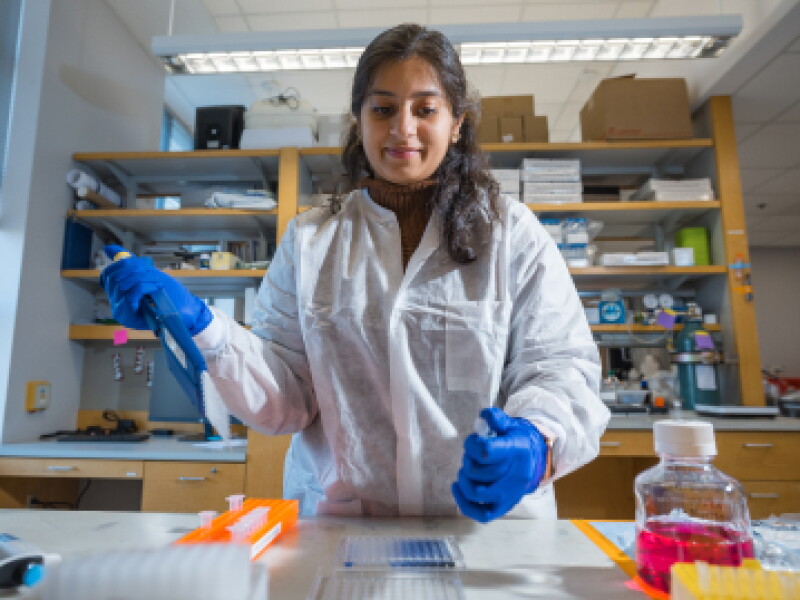
A female CWRU biomedical engineering student drawing a test sample in the campus lab.

Clinical Engineer
Median annual salary: $151,0003
Lead the deployment, maintenance and management of medical equipment across hospitals and health systems. Ensure safe operation, regulatory compliance and the integration of new technologies into clinical practice.
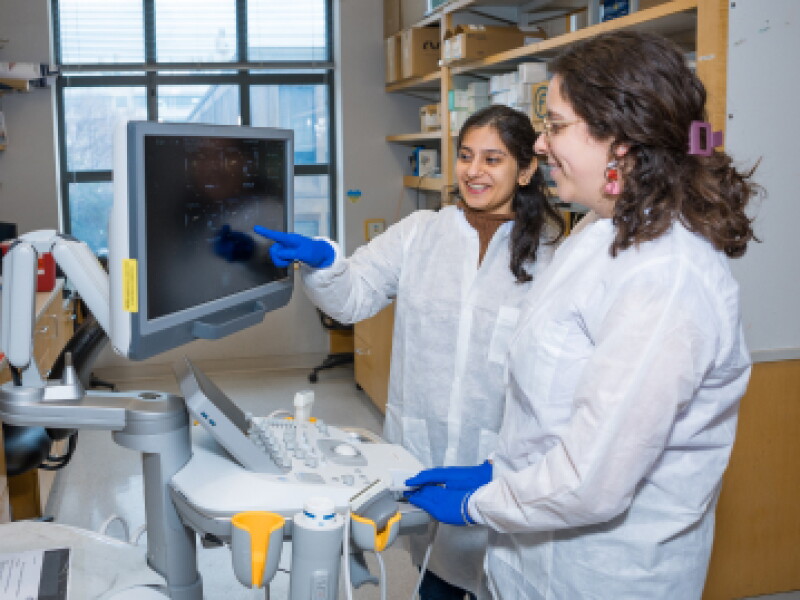
Two female CWRU biomedical engineering students review analytic metrics on computer screen.

Biostatistician
Median annual salary: $113,1624

Design clinical trials and biomedical research studies. Analyze the data that shapes medical, pharmaceutical and public-policy decisions. Work inside pharmaceutical companies, hospitals, government agencies and academic research.
A female CWRU biomedical student reviews prosthetic wireframes on a computer screen.

Biomedical Software Engineer
Median annual salary: $194,0005

Build the software powering medical devices, diagnostic tools and healthcare platforms. Combine biomedical knowledge with software engineering to deliver tools that doctors and patients depend on.

A Significant Tuition Reduction for Every Qualified Applicant

Every qualified new applicant to the online Master of Engineering program receives a tuition reduction of more than $28,000, bringing total program tuition to $39,000. CWRU alumni receive an additional scholarship. Employer reimbursement, federal aid and veterans' benefits can work to your advantage, as well.

Review Tuition and Financial Aid

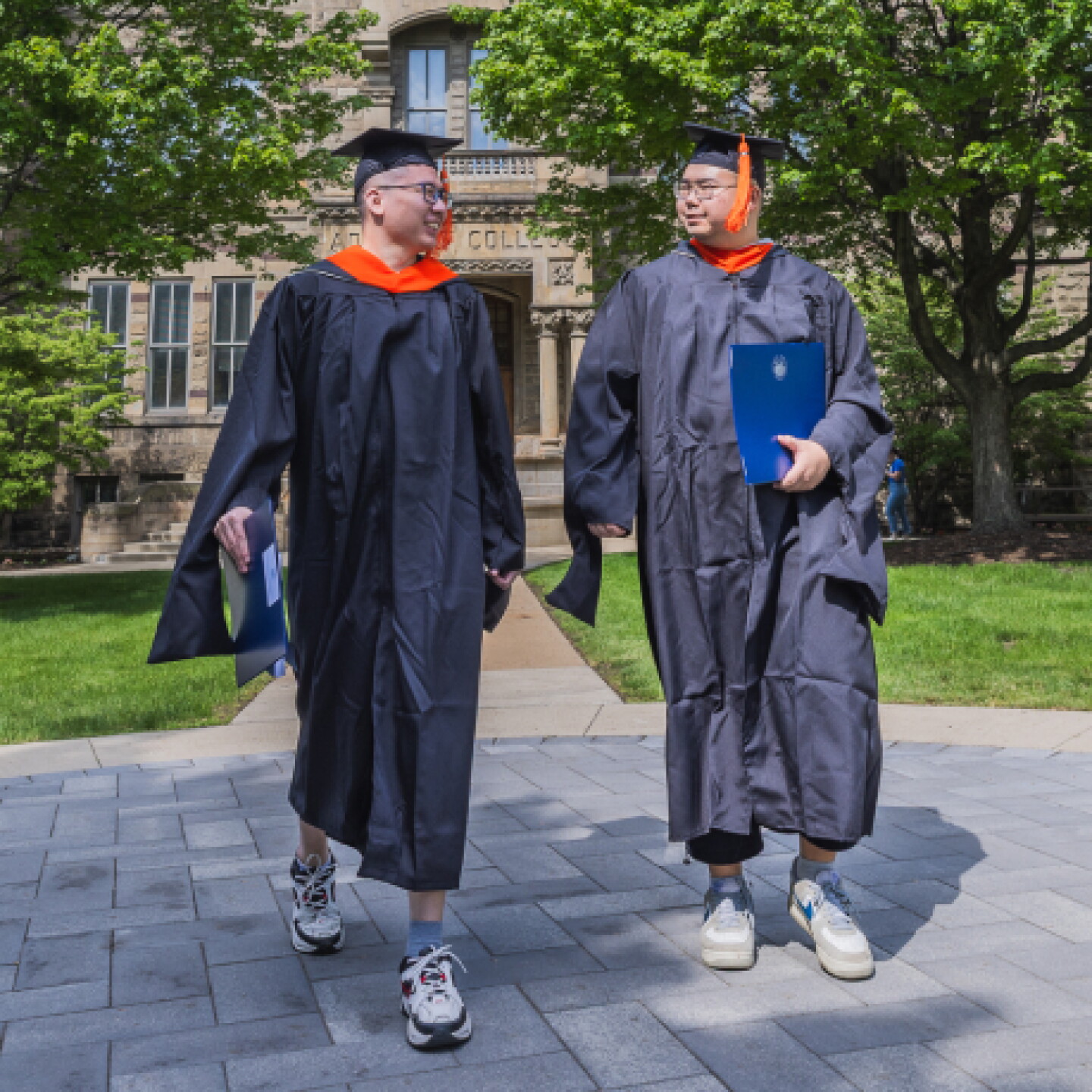
Two male CWRU graduates walking outside the campus grounds.
CWRU Admission Advisor Brad

Need more info? We’ve got you covered.

There’s a lot to know about the online programs in Case School of Engineering, and you’re bound to have questions. We’re here to help. For information and support, schedule a call with Brad: He’s a knowledgeable, friendly admissions outreach advisor who’ll make sure you get all the answers.

Admissions Deadlines

Oct
31
Priority Deadline
October 31
Spring 2027 Term
Nov
30
Final Deadline
November 30
Spring 2027 Term
Jan
11
Start Date
January 11
Spring 2027 Term